

A shoe rack looks like a simple purchase until it lands in the entryway. Suddenly the front door bumps into it, tall boots do not fit, somebody drops shoes beside it anyway, and the tidy-looking cabinet turns into another place to pile things.
The better question is not “Which shoe organizer holds the most pairs?” It is “Which entryway shoe storage setup fits the space and the way people actually come through the door?” An open rack, storage bench, slim cabinet and cubby unit solve different problems. This guide helps you choose among them without buying twice.
Quick Answer: Pick the Storage Style That Solves Your Real Problem
- Open shoe rack: easiest to see and grab everyday shoes; not ideal if you want to hide visual clutter.
- Shoe bench: useful when people need somewhere to sit to remove shoes; check whether its actual shoe space is enough.
- Slim tilt-out cabinet: tidier looking for a narrow wall, but the compartments may not accept larger sneakers, boots or wide shoes.
- Open cubbies: good for giving each person a defined spot; bulky footwear can waste cubby space.
- Boot tray plus a small rack: often the most practical choice for wet shoes and daily pairs, even if it is not the prettiest photo.
A busy entryway can also need two zones: an easy-to-access spot for the shoes worn today and a separate closet or cabinet for occasional pairs. Trying to store every shoe owned beside the front door is a common way to overcrowd the entrance.
Start With a Five-Minute Entryway Test
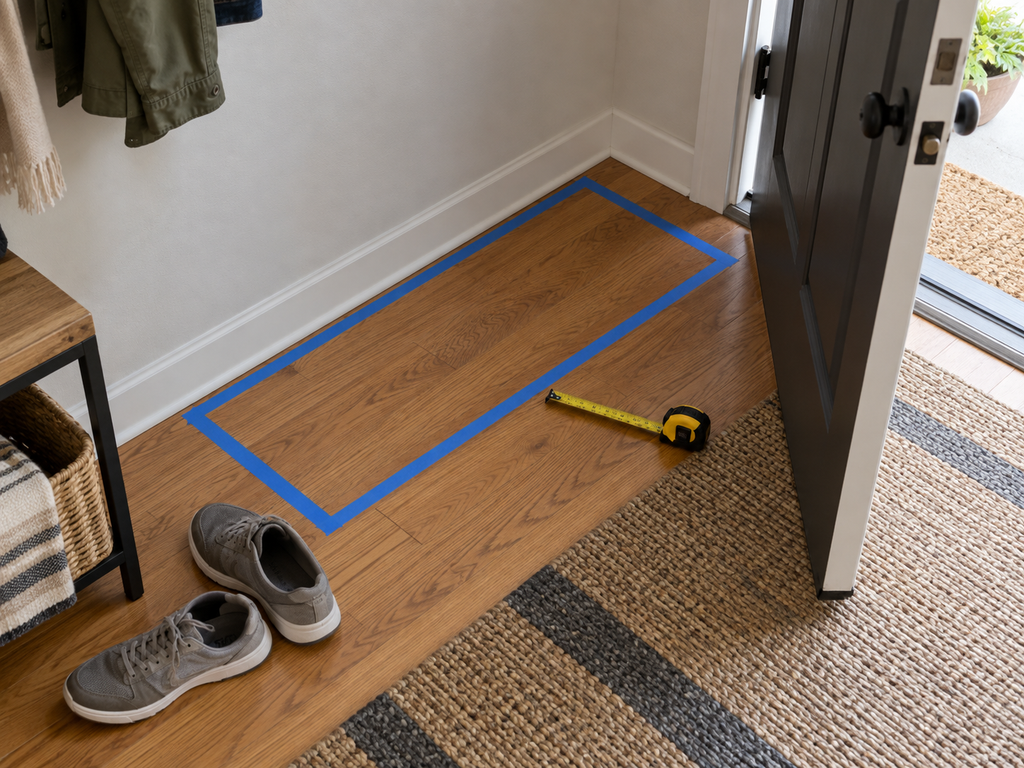
Before opening shopping tabs, make a quick sketch of the actual entry. You do not need design software, just a tape measure, the door open, and a realistic count of shoes.
- Measure usable wall width. Account for trim, outlets, vents, switches and nearby doors.
- Check cabinet depth. Measure how far a bench or cabinet can project without becoming an obstacle.
- Open every door fully. Check the front door, closets and any cabinet doors or drawers you would add.
- Count daily pairs. For example, a four-person household with two routinely used pairs each needs space for about eight pairs—not necessarily every seasonal pair in the house.
- Notice wet-shoe traffic. Decide where muddy shoes or boots can drain and dry instead of going directly into an enclosed compartment.
To test the footprint, mark the planned furniture edges on the floor with painter’s tape. Walk the usual route through the room, carry a bag, open the door, and pretend you are putting shoes away. If it already feels awkward with tape, adding the furniture will not improve it.
One More Search tip: The width listed in a product description is not the whole story. Check the assembled outside dimensions, door and drawer clearance, baseboard interference, and whether you have room to reach the shoes without blocking the entry.
Open Shoe Rack: Best When Speed Matters Most
An open rack is probably the least complicated option. Shoes remain visible, people can find their pairs, and nothing has to swing open before a pair can be put away. For everyday footwear in a high-traffic entry, that convenience can matter more than a perfectly hidden look.
Where it works: mudrooms, garages, hallway niches, and household entrances where people kick off shoes several times a day.
The tradeoff: open racks do not conceal clutter, and tall shoes may leave awkward gaps. Deep rows can also hide pairs at the back. Measure the usable shelf depth and the vertical distance between shelves, not only the overall dimensions.
Before buying: check for an easy-clean material, stable footing, actual capacity with adult shoes rather than tiny staged pairs, and enough air space for damp footwear to dry.
Shoe Storage Bench: Best When Someone Needs a Seat
A bench can do two jobs: provide a place to sit and hold the shoes that would otherwise gather on the floor. It is especially useful for families with small children, older visitors, or anyone who prefers sitting while changing footwear.
But benches do not automatically have good storage. Some have a low shelf that fits only a few pairs; others have tall compartments, baskets, or a lift-up top that is inconvenient to open when bags are stacked on the seat.
Where it works: a wider wall by the door, an entryway with room to sit without obstructing traffic, or a mudroom where seating is genuinely useful.
The tradeoff: a bench uses more floor depth than a narrow rack. Confirm both the stated seating/load rating and the shoe-storage dimensions, and avoid treating decorative benches as heavy-duty seating without checking the manufacturer’s guidance.
Slim Shoe Cabinet: Best for a Tidy Look Along a Narrow Wall
A slim tilt-out cabinet can make a visible entryway feel calmer because the shoes disappear behind doors. This is appealing in a living-room-adjacent entry or a hallway that does not have a dedicated mudroom.
The catch is that shallow outside depth is not the same as generous inside space. Tilt-out compartments often fit ordinary low shoes more easily than bulky running shoes, high-top sneakers, work boots or larger footwear. The door needs room to tilt forward, too.
Where it works: a narrow wall where appearance matters, the household mostly stores low-profile daily shoes, and the cabinet can be anchored appropriately.
The tradeoff: fit is less flexible, compartments can be awkward to clean, and closed storage is not a great first stop for soaked footwear.
Important safety note: tall or narrow storage furniture can present a tip-over hazard. Follow the maker’s anchoring instructions and use suitable wall anchors when required; the U.S. Consumer Product Safety Commission advises securing furniture to reduce tip-over risks.
Open Cubbies: Best When Everyone Needs Their Own Spot
Cubbies are less about maximum capacity and more about removing ambiguity. Instead of a communal pile of shoes, each person has an assigned space. That can make shoes easier to put away and easier to find in the morning.
Where it works: family mudrooms, laundry entrances, and homes where the bigger problem is that nobody knows where things belong.
The tradeoff: fixed compartments waste space with odd-size shoes, and the neat look can disappear when one person needs boots and another has multiple pairs of sneakers. Measure the cubby opening rather than trusting a marketing photo.
A simple labeled basket can fill a similar role without committing to a large furniture piece. Labels should help people use the system, not turn organization into an elaborate sorting job.
What About Over-the-Door Shoe Organizers?
These can work inside a closet when floor space is precious, especially for slippers or lightweight low-profile shoes. But they are usually a poor fit for the front door itself. Check that the hooks do not interfere with the door closing or with weather stripping, and that the organizer does not block a safe path through the entry.
If you are deciding between another floor unit and using a nearby closet, try the closet first. Keeping only everyday pairs by the door can be a more effective fix than buying a bigger entryway unit.
The Part Pretty Storage Photos Often Leave Out: Wet Shoes
Rain, snow, yard work and sports can turn shoe storage into a moisture problem. An enclosed cabinet may look great, but it is not the ideal place to shut damp shoes away immediately after they come off.
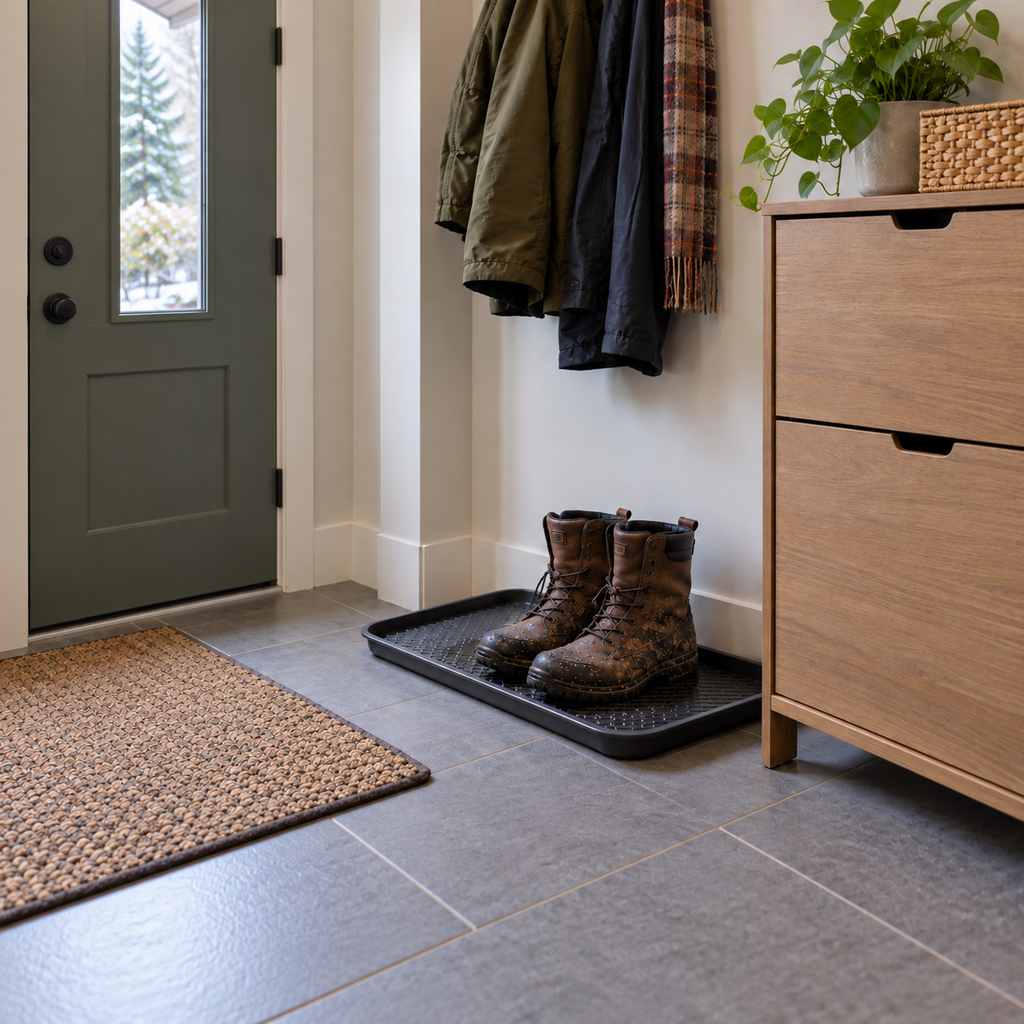
Put wet or muddy footwear on a washable tray where it can dry, and move it into closed storage afterward. Wipe down the surrounding floor as needed. The U.S. Environmental Protection Agency emphasizes moisture control and prompt drying of damp areas as part of preventing mold.
That does not mean everyone needs a specialized boot rack. A tray you can pick up and wash may be enough. The key is making the “wet pair” decision obvious when someone walks in.
How I Would Choose for Three Common Entryways
A small hallway with no mudroom
Start with a narrow closed cabinet only if the shoe sizes fit, the unit can be securely installed and there is room for its door to open. Otherwise, a shallow open rack inside a nearby closet might be a better purchase. Prioritize keeping the walkway clear over hiding every shoe.
A busy family entry with backpacks and sports gear
Use a seat if it will genuinely be used, plus an open rack or individual cubbies for the daily pairs. Store seasonal shoes somewhere else. One washable tray near the door handles wet shoes. If people still drop pairs on the floor, move the organizer closer to where they naturally stop, rather than blaming the people using it.
A garage or laundry-room entrance
An open, easy-to-wipe rack and boot tray usually beat a delicate finished cabinet. This is a utility area where access, ventilation and cleanup matter more than matching the living-room furniture.
Before You Buy: The Checklist That Prevents Returns
- Does the organizer fit the usable wall space and leave a clear walking/exit path?
- Will the front door, closet door and organizer doors or drawers open without colliding?
- Will your actual largest pair fit—especially work boots or bulky sneakers?
- Does the product hold the number of pairs you need in normal daily use, not just in carefully staged photos?
- If it is tall or narrow, can it be anchored safely according to instructions?
- Can you remove dirt, sand and moisture without taking the entire unit apart?
- Can everyone in the household put a pair away quickly, without lifting a lid or rearranging a pile?
Do not buy a piece that blocks a door or escape route just to add storage. The U.S. Fire Administration advises keeping doorways and windows clear for escape. A storage solution should make the entry safer and easier to use, not harder.
Our Recommendation: Start Smaller Than You Think
For many households, the best entryway shoe-storage system is a simple two-part setup: a small, reachable place for the shoes worn most often and a separate home for wet or rarely used pairs. An open rack or bench can be enough. If visual clutter is the real frustration, a slim cabinet is worth considering after checking actual shoe size and door clearance.
The right choice is not the organizer that promises the most pairs. It is the one that lets people walk in, put shoes away quickly, and find them again without creating a new pile.
Before you buy, do one more search.
Sources & Further Reading
- U.S. Consumer Product Safety Commission — Anchor It! (furniture stability and anchoring guidance)
- U.S. Environmental Protection Agency — A Brief Guide to Mold, Moisture and Your Home (moisture management)
- U.S. Fire Administration — Hoarding and Fire Safety (the general importance of keeping doorways and escape routes clear)